
The Enterprise Guide to Supplier Diversity in Corporate Gifts: From One-Off Purchases to a Scalable Inclusive Procurement Strategy
July 3, 2026
Trying to align your company’s buying power with your values? You’ve probably run into a frustrating gap. When you search for ways to diversify your merchandise spend, the options usually split into two extremes: reading dense, 50-page government documents, or buying a few artisanal gift boxes for a heritage month.
One-off purchases are great for a quick morale boost. But they don’t move the needle. To make a real impact, supplier diversity spending needs to move beyond a one-time HR gesture into a measurable, year-round inclusive procurement strategy.
This guide will show you how to build a compliant sourcing program, protect your brand from greenwashing, and make sure your budget creates documented, verified, trackable results.
Key Takeaways:
- Centralize your buying: Move from scattered, last-minute purchases to a managed online merchandise store to cut rogue spending and make tracking easy.
- Demand verified proof: Rely on formal third-party certifications from bodies like WBE Canada, the Canadian Aboriginal and Minority Supplier Council (CAMSC), and the Canadian Queer Chamber of Commerce (CQCC) — not vague marketing claims — to protect your brand from tokenism.
- Automate your tracking: Use one platform to capture accurate spend data, making your annual Environmental, Social, and Governance (ESG) reporting clean and stress-free.
- Curate for dual impact: Look for certified diverse promotional products that also meet strict environmental certifications, so every purchase works harder.
Why the Gift Box Approach Falls Short
True supplier diversity means putting your DE&I commitments into action through how you source your branded merchandise. Choosing certified WBE, BIPOC (Black, Indigenous, and People of Colour), and LGBTQ+ owned businesses ensures your budget actively supports those business owners, while bringing fresh, competitive ideas to your supply chain. But the impact fades when these partnerships are treated as one-off purchases. Limiting your diverse spend to occasional corporate gifts makes it impossible to capture the clean data your ESG reporting needs.
By treating diverse sourcing as a one-off checkbox exercise, companies also miss out on a major edge. Research from The Hackett Group shows that virtually all diverse suppliers meet or exceed buyer expectations, and that top performers in supplier diversity see no loss in efficiency while gaining improved quality, increased market share, and access to new revenue opportunities. Treating these suppliers as a compliance metric misses the point. They’re a business driver.
So if the business case is that strong, why do so many organizations still rely on the scattered “gift box” approach?
Because the logistics of sourcing at scale are genuinely complex. At Fairware, we see this every day. Sourcing from dozens of unvetted vendors is like tracking your spending with receipts stuffed in different jacket pockets. The money was spent, but the trail goes cold at year-end. You end up with uneven quality, invoices that don’t match any certification, and a reporting headache at year-end.
That’s exactly why scaling these programs is so tough. You need high-quality branded merchandise from diverse-owned businesses, but you can’t afford to add hours of extra work to your team’s plate. The goal is to make the process simpler without cutting corners on impact.
Quick note: Take a look at your current merchandise spend. Are your purchases from diverse suppliers bunched into just one or two months of the year? If so, try moving those dollars into your year-round programs — like new-hire welcome kits or your branded online merchandise store.
Ready to build a year-round buying strategy? Let’s talk.
Building a Compliant Procurement Program
The fix isn’t just about finding better suppliers. It’s about changing how merchandise is bought in the first place.
Think of it like moving from a patchwork of departmental credit cards to one central buying ledger: everything visible, everything traceable, everything easy to defend at year-end.
That’s what a dedicated online company store does for your merchandise program. Instead of your teams buying from wherever is most convenient, everyone shops from a pre-approved catalog of vetted products. Rogue spending stops. Orders consolidate. And because every purchase flows through one platform, your diverse supplier spend is tracked automatically. No chasing receipts, no manual cross-checking at year-end.
At Fairware, we start every program the same way: strategy first, product second.
Before we look at a single item, we map your merchandise to your company goals, budget, and audience. Only then do we move to product selection, sourcing items from vetted, impact-driven suppliers on your behalf.
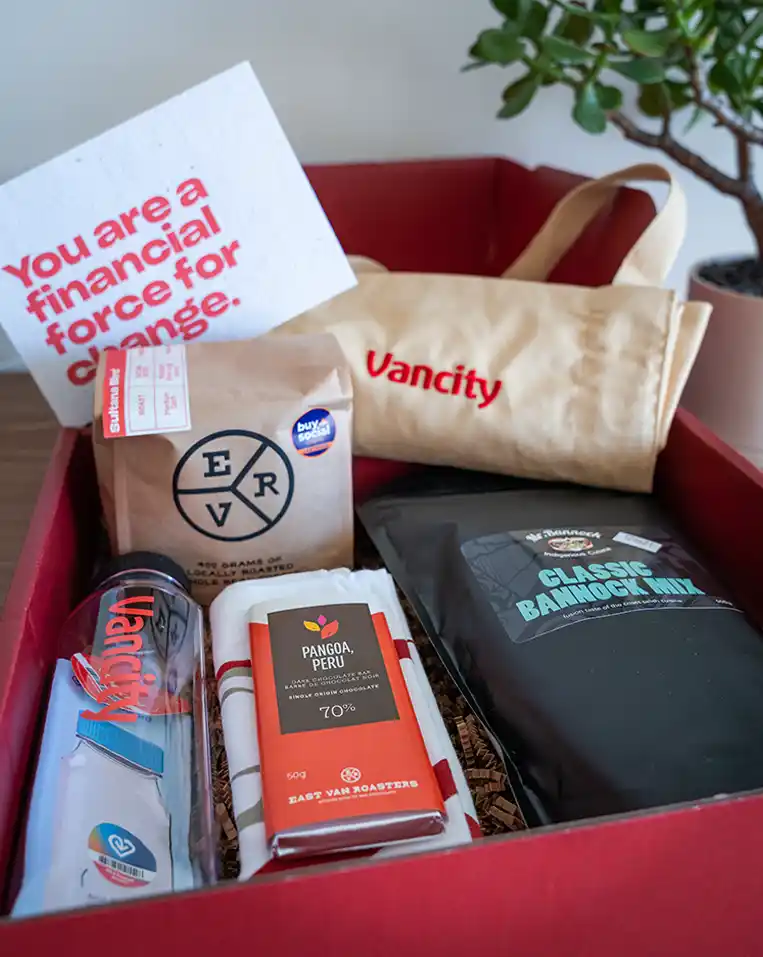
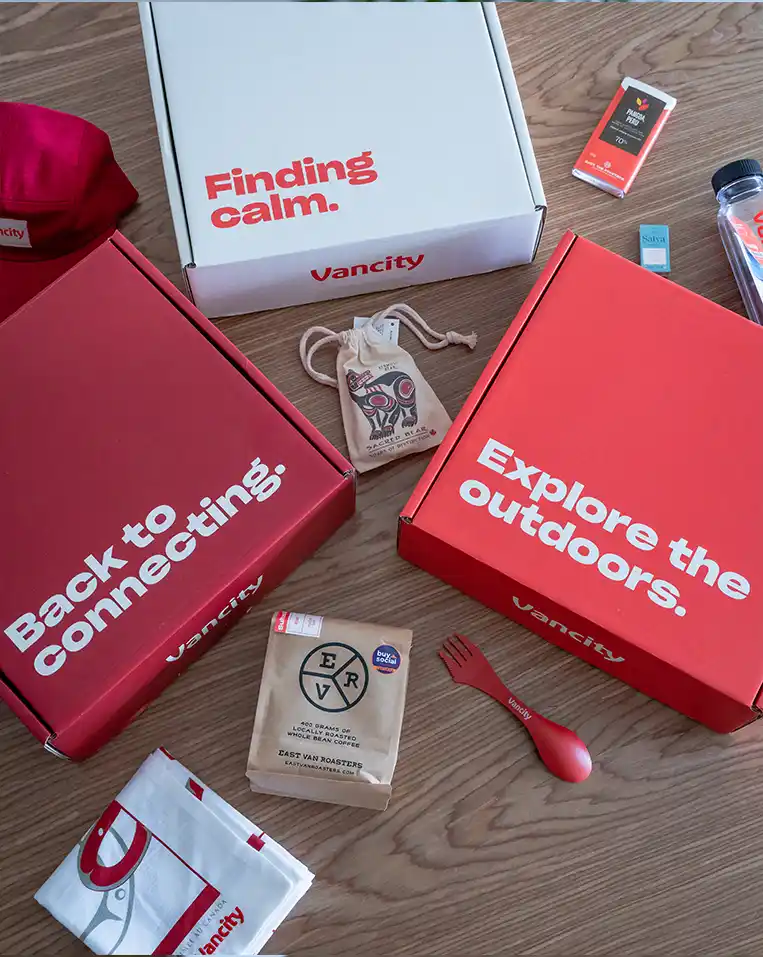
Our work with Vancity shows what this looks like in practice. We built a custom pop-up shop with three distinct employee appreciation kits, letting their team pick the gift that worked best for them. We chose those kits to highlight local businesses, diverse suppliers, and items with verified environmental certifications. Their spend went toward Indigenous-owned businesses like Mr. Bannock and Great Bear Rainforest Essential Oils, social enterprises like East Van Roasters, and certified B Corps like MiiR. A standard gifting moment became a measurable, documented impact. You can see the full details in the Vancity Employee Appreciation Kits case study.
Setting up your buying this way does more than cut down on admin. It creates a steady, meaningful flow of dollars to diverse-owned businesses — and that’s how a merchandise program shifts from a one-off effort into something that actually drives your ESG results.
Quick note: When building a kitting program or web store, give your team the power of choice. Letting employees pick the item that works best for them cuts waste and lets you feature a wider range of diverse vendors in a single campaign.
Verifying the Supply Chain
Good intentions won’t protect your brand. Paperwork will.
Regulators on both sides of the border are watching corporate environmental and diversity claims closely — as reinforced by the FTC Green Guides in the US and the Competition Bureau’s June 2025 final guidelines on environmental claims in Canada. If you’re rolling out a supplier diversity merchandise program, you need more than a good story to avoid legal and brand risk.
That said, this pressure shouldn’t push your organization into greenhushing, which means staying quiet about your genuine efforts out of fear of scrutiny. Sharing what you’re actually doing builds trust with your stakeholders and sets a good example for your industry.
When your executive board sets specific supplier diversity program targets, your buying strategy needs to back them up. That means directing spend toward certified WBE, BIPOC, LGBTQ+ owned businesses, and having the paperwork to prove it.
Words like “sustainable,” “eco-friendly,” and even “diverse” are just marketing unless they’re backed by third-party proof. That’s where formal certifications come in. They let you rely on independent, outside auditors rather than a vendor’s self-reported claims.
In Canada, WBE Canada certifies women-owned businesses and the CQCC certifies LGBTQ+-owned businesses — the same certifications Fairware holds as a certified diverse-owned company. For BIPOC-owned and Indigenous suppliers, CAMSC is the leading certifying body.
In the US, NMSDC (National Minority Supplier Development Council) certifies minority-owned businesses, WBENC (Women’s Business Enterprise National Council) focuses on women-owned businesses, and NGLCC (National LGBT Chamber of Commerce) serves LGBTQ+-owned businesses.
What does a truly defensible purchase look like, one that holds up in an ESG audit, passes legal review, and still delivers something your employees are proud to receive?
We call it a “dual impact” approach. Look for items that check two boxes at once:
- Diverse Ownership: Certified by WBE Canada, CQCC, CAMSC, or US equivalents like NMSDC, WBENC, or NGLCC.
- Material Traceability: Backed by environmental standards like GRS (Global Recycled Standard) or FSC (Forest Stewardship Council).
- End-of-Life Plan: Durable, useful items that stay out of the landfill.



At Fairware, every product in our catalogue is sourced with this dual standard in mind. Our B Corp Corporate Gifting Lookbook is a good place to start. It features certified products from brands like MiiR, Patagonia, and Cotopaxi, each chosen for meeting diversity and environmental standards.
Quick note: Before signing off on any project, ask your merch partner for the supplier diversity certificates and raw-material paperwork upfront. A good partner will have those files ready before you even have to ask.
Tracking Dollars and Reporting Impact
Once your supply chain is verified, the final piece is tracking the data. In the world of corporate compliance, if you can’t measure the spend, it essentially didn’t happen.
When your diverse spend is scattered across departments and vendors, year-end reporting becomes a real problem:
- Chasing down invoices from multiple vendors
- Manually matching receipts to diversity certificates
- Finding out some suppliers can’t produce paperwork at all
- Presenting numbers you can’t fully defend to your executive board
One central merchandise program changes all of this. When all your branded merchandise flows through a single platform, the data is captured automatically. You can see exactly how many dollars went toward diverse suppliers across your whole organization.
Your legal and sustainability teams need clear, verified paperwork. Documentation they can confidently stand behind when it counts.That means being able to show exactly how much of your budget went to WBE, BIPOC, and LGBTQ+ certified suppliers by quarter, by department, and by campaign. At Fairware, we handle this as part of every program we manage, pulling together raw-material records and supplier spend data well before your annual review. You can see how we approach supply chain transparency in our Supplier Code of Conduct.
When it’s time to present your annual ESG report to the executive board, you shouldn’t be scrambling for numbers. You should be handing over a clean, verified summary that proves your budget created real, measurable change.
Quick note: Don’t wait until the end of your fiscal year to pull impact data together. Ask your merchandise partner for quarterly spend reports. This keeps your tracking current and lets you adjust if you’re falling short of your annual diversity targets.
Conclusion: From One-Off Effort to Lasting Impact
Your branded merchandise is a visible sign of what your company stands for. When you shift that spending from a seasonal purchase into a core part of your inclusive procurement strategy, you do more than hit an internal ESG target. You create a steady, meaningful flow of dollars to diverse-owned businesses.
The logistics can feel complex. But with the right setup — one central program, verified certifications, and automatic tracking — it doesn’t have to be.
Your next step is simple: look at your current merchandise spend, spot where scattered buying is happening across your teams, and start asking your vendors for their certification paperwork. If the data is hard to find, that’s a sign it’s time to rethink how you’re buying.
Your merchandise should reflect your ESG commitments, not complicate them. Ready to move beyond one-off purchases and build a scalable, inclusive buying program?