
Plastic-Free Promotional Products: What to Look for When Choosing Your Merch
October 23, 2026
When your organization asks for plastic-free promotional products, the options can look straightforward at first. Stainless steel water bottles and cotton totes are easy picks. But a steel bottle can still come with a plastic lid, and plastic can show up in parts of an item you wouldn’t think to check.
Whether plastic-free is one part of your plan for zero-waste corporate gifts or the whole brief, this guide compares stainless steel, glass, and organic cotton merch material alternatives. It also walks you through what to check in the components, customization, and packaging, so you know exactly what you’re ordering.
Key Takeaways
- Consider how people will use an item and how you’ll get it to them when comparing plastic-free materials.
- Before you commit to a promotional item, ask your merch provider whether its exact components, decoration, or coatings contain plastic.
- Packaging counts too: individual wrapping, protective materials, and shipping packaging can all add plastic to your order.
What Does “Plastic-Free” Mean for a Custom Merchandise Order?
Search for “plastic-free promotional products” and you’ll find plenty of material ideas. Steel water bottles. Cotton totes. Notebooks described as made with “recycled materials.” Those lists can help you build a shortlist. But before you make your final choice, you need an answer to a more specific question: Is this branded product really plastic-free?
To answer it, start with what plastic-free means: a product with no plastic in its components, coatings, or customization. That means looking beyond the material named in the product description, at details like a bottle’s lid and seal, a tote’s zipper pull, or the material used to add your logo. The same goes for products described as made with “recycled materials.” If that material is recycled plastic, the product isn’t plastic-free.
What to look for depends on whether you want the product to be plastic-free or the entire order, including how it’s packed and shipped. Either way, here’s what to check:
- Material blends: Products or components described as “wheat straw,” a plant fibre, may use polypropylene to bind the fibres together. A tote made with cotton fabric may still be sewn with polyester thread. The main material can be described accurately while plastic remains in another part of the item.
- Linings and coatings: A paper cup may have a polyethylene lining to hold liquid. Paper or fabric products can also have plastic coatings. You may not spot either detail in a product photo, but they’re part of the finished item.
- Customization materials: Your logo might be applied with a vinyl transfer. A sticker may have a plastic film, or a hang tag may be attached with a plastic fastener. Customization can change what’s in the finished product, even when the undecorated item looks like a good fit.
- Packaging and shipping: The products may contain no plastic and still arrive in individual plastic bags or bubble wrap. Plastic packing tape or a plastic shipping-label pouch can come with the outer box too. Those details matter if you want the whole order, not just the items, to be plastic-free.
- Plant-based and compostable materials: Neither of these labels tells you that a material is plastic-free. Some plant-based or compostable materials are bioplastics, which are still plastics.
Once you know what to check, you can go back to your shortlist and see which products are really plastic-free. When you share your picks with your team, describe the materials you can verify, like a stainless steel body or organic cotton fabric, and be clear about whether plastic-free refers to the item or the whole order.
Three Materials to Consider and How to Evaluate Them
Stainless steel, glass, and organic cotton can each replace items that are often made of plastic, like drinkware and bags. The right choice depends on who the item is for and how it will be used. For each material below, we look at what it offers, its practical drawbacks, and what you’ll need to verify about the finished version.


The Stainless Steel memobottle is made from Premium food-grade 304 stainless steel body, satin lid is also stainless steel, with a food-grade silicone seal.
Stainless steel
Stainless steel can be a good plastic-free option when you’re looking for an alternative to plastic bottles, cups, or food containers. Its durability can make sense for drinkware that people will carry and use regularly. But a stainless steel bottle isn’t necessarily plastic-free.
Its lid, drinking spout, seal, or lining may contain plastic, even if the body is steel. Ask the supplier for the finished product’s specifications to confirm what those parts are made of. Another thing to consider with stainless steel bottles is how your logo is added. Some methods, like printed decals or vinyl transfers, add a layer on top of the steel that can contain plastic. That’s where engraving can help. It marks the logo right into the steel, which avoids adding that extra layer.
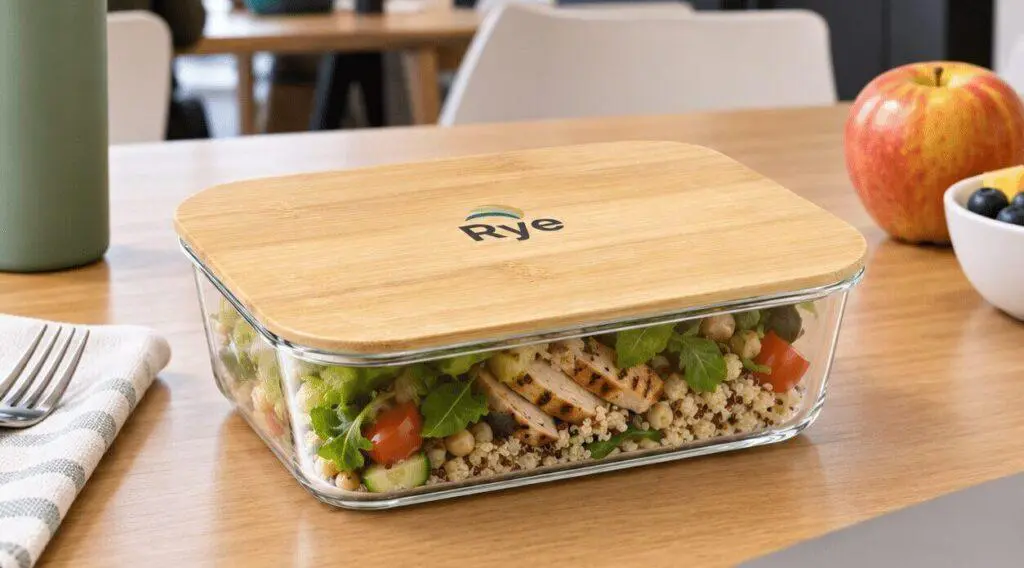
7 Cup Bamboo Food Storage Container both include glass base and FSC-certified bamboo lids with Silicone elements.
Glass
Glass is worth a look for drinkware that people will use at their desks or at home. But it’s breakable, so how you deliver it matters. Shipping pieces individually may call for more protective packing than delivering a bulk order to one location.
Check whether the glass has a lid or protective cover, and ask how your logo will be added. Those details may introduce plastic to the finished item. Then ask how the glass will be protected in transit. A cardboard carton may still contain bubble wrap, which matters if you plan to describe the delivered order as plastic-free.

Custom-printed organic and fair-trade certified tote bags.
Organic cotton totes and pouches
A cotton tote or pouch may look like a simple alternative to a plastic bag. But the fabric is only one part of the finished item, and it’s worth choosing a bag people have a reason to use again.
An organic cotton claim needs evidence. If the supplier describes the finished item as certified to the Global Organic Textile Standard (GOTS), ask for documentation covering the finished item, not just its fabric. GOTS explains its product labelling requirements, including why certified fabric alone isn’t enough. GOTS certification also doesn’t establish that the item is plastic-free, so ask what the thread, closures, and print are made of.
Some totes contain a blend of fibres. If recycled content is part of the description, find out which fibres are used and in what percentages. Recycled polyester still contains plastic. For a recycled-content claim, ask for documentation that applies to the specific product, such as Global Recycled Standard (GRS) certification where relevant.
Choosing merch for an event or program? Tell us who the merchandise is for and when you need it. We can help you compare options and work through what the product specifications support.
Check the Finished Product and the Way the Order Is Assembled
Once you’ve chosen a material, the next step is to look at the finished version of your merch. A product photo may show it before your logo is added, and it won’t show how the order will be packed. Both can add plastic, even when the product itself is made from one of the materials above.
That’s why the logo method and packing are worth choosing as carefully as the material. A supplier may offer different ways to apply a logo, attach a tag, protect an item, or pack several items together. Ask which options are available for your order and what materials each would add to the finished product or shipment.
Before you sign off, request:
- Specifications for the finished item, including its components and how your logo will be applied.
- A sample, if available, so you can see and feel the materials for the version you’ve chosen.
- A written packing plan that names any individual wrapping, protective materials, and outer shipping materials.
Together, these answer the material questions a product photo can’t.
For example, say you’re ordering cotton totes for a conference. The supplier suggests a vinyl transfer for the logo and individual plastic bags for shipping. The fabric may be cotton, but the vinyl becomes part of the finished tote, and the plastic bags become part of the delivered order. If you want to avoid those materials, ask what other decoration and packing options are available, then check what those alternatives contain before you count the order as plastic-free.
As a final step, confirm that the quote matches the version you checked, including the decoration and packing. It’s also worth asking how you’ll be told if a product or packing detail changes before production, since any replacement needs the same checks as the original.
Common Questions About Plastic-Free Promotional Products
Are recycled plastic products plastic-free?
No. Recycled plastic is still plastic, so a bottle or tote made from it isn’t plastic-free. If recycled content matters to your organization, ask what percentage of the product is recycled and whether it’s certified, for example by the GRS, which verifies recycled content through the supply chain.
Can a product labelled plastic-free still contain plastic?
It can. Under the FTC’s Green Guides, a “free-of” claim like plastic-free can be used when a product contains no more than trace amounts of a substance that wasn’t added on purpose. If you need merch with no plastic at all, ask your merch provider what every part is made of. For a closer look at how environmental claims are regulated in Canada and the U.S., see our guide to the 2026 greenwashing regulations.
What can replace plastic packaging for promotional products?
Paper-based options, like kraft paper bags or cardboard boxes, can replace individual plastic bags or bubble wrap. Ask about them when you review the written packing plan mentioned above.
Choosing Plastic-Free Promotional Products With Confidence
Plastic-free merch comes down to more than the material. A stainless steel bottle or an organic cotton tote can be a solid choice, but details like the lid, the logo, and the packing decide whether the finished order is plastic-free. That’s where a merch partner committed to social and environmental sustainability can make the biggest difference.
Have a shortlist? We can help you compare the options, confirm the details with suppliers, and choose merchandise that fits your audience and timeline.
Fairware Team
Fairware is North America’s leading sustainable branded merchandise agency. A founding Canadian Certified B Corporation, certified women-owned through WBE Canada and LGBTQ+-owned through the Canadian Queer Chamber of Commerce (CQCC), we’ve spent more than 20 years helping purpose-driven organizations create merchandise programs that deliver measurable environmental and social impact. Our team combines expertise in responsible sourcing, supply chain transparency, and sustainable procurement to help organizations make better merchandise decisions. Learn more about Fairware.